
EQUITY RESEARCH
Acba Bank OJSC (AMX: ACBA) | Update Q2 2026
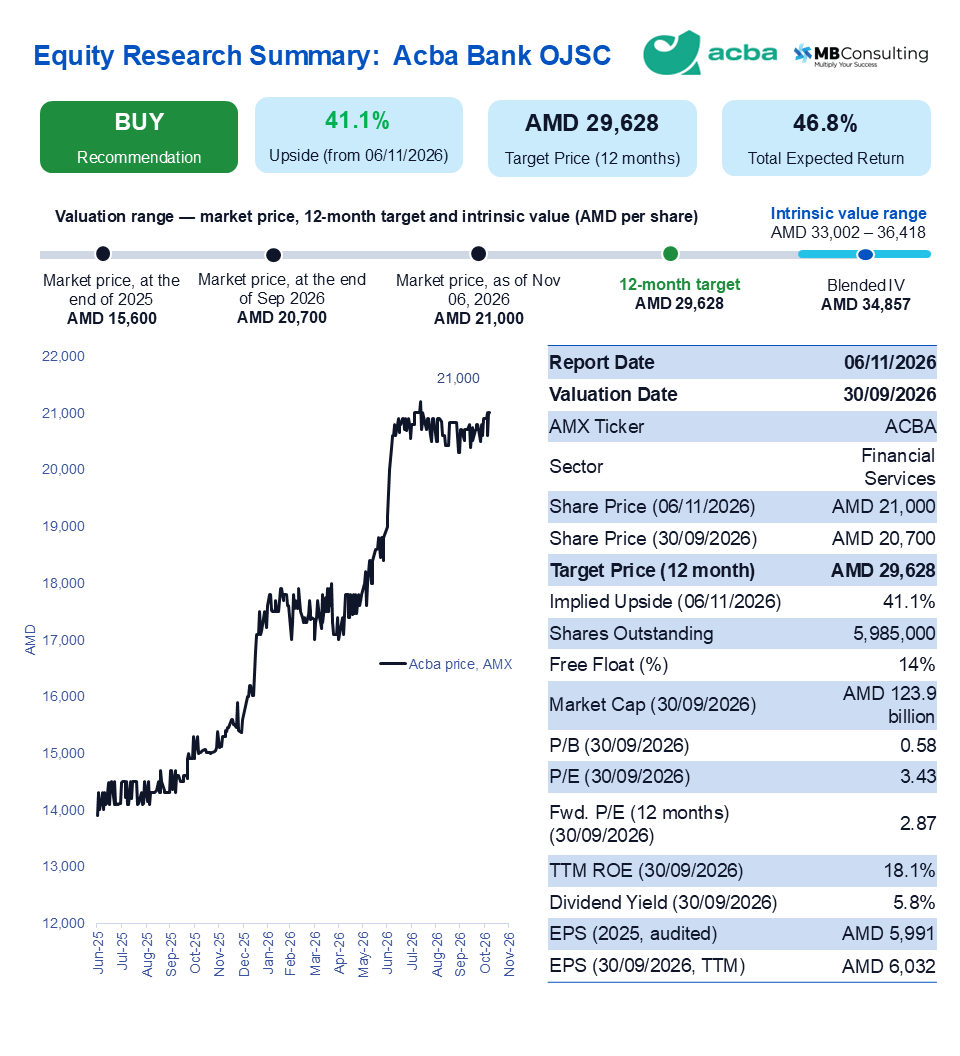
Valuation date: 30 September 2026 Report date: 06 November 2026 Expected total return: 46.8%
Investment thesis
RecommendationBUY
Rating scale: Buy >+15% | Hold −10% to +15% | Sell <−10% expected total return over a 12-month horizon.
12-month target
AMD 29 628
Price (November 06, 2026)
AMD 21 000
Upside to target
+41.1%
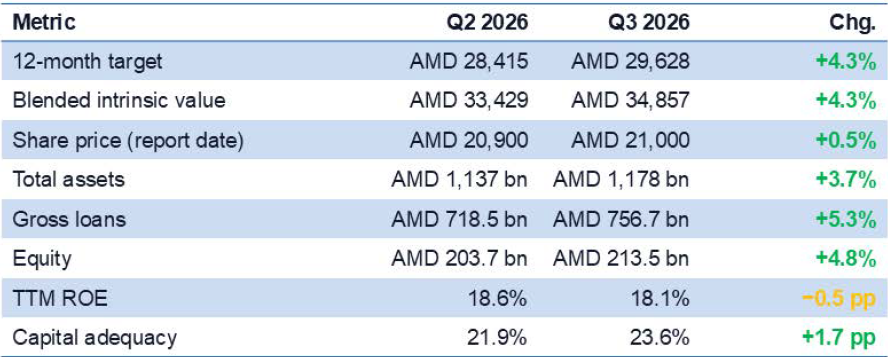
We reiterate our Buy rating and raise our 12-month target to AMD 29 628, up 5.3% from AMD 28 415 as of Q2 2026. Blended intrinsic value rises to AMD 34 857 (from AMD 33 429) on a higher equity base and continued earnings growth. The shares have risen 10.5% from our Q2 2026 valuation date to AMD 21 000, the re-rating we anticipated is underway, yet still trade at a significant discount to intrinsic value.
Acba maintained solid balance sheet momentum in Q3 2026 with assets reaching AMD 1.18 trillion, up by 19.6% YoY.
Loans and deposits continued to expand, while a growing share of deposits in the funding mix and a stable loan-to-deposits ratio of 1.03x supported a more balanced funding structure.
Acba Bank’s earnings returned to growth in Q3 2026: net profit rose 5.6% YoY and 10.5% QoQ to AMD 9.9 billion. Operating income grew 16.3% YoY, driven by 13.4% growth in net interest income and a 27.1% rise in non-interest income (led by FX trading).
With 18.1% TTM ROE for Q3 2026 Acba Bank remains a solid earnings performer maintaining ROA and ROE above the industry median.
Changes since last update (Q2 2026)
ISSUER-PAID RESEARCH
This note was prepared under an issuer-paid arrangement with Acba Bank OJSC for a fixed fee that is independent of its conclusions, the rating assigned, and the target price. MB Consulting retains full editorial control over methodology, assumptions, and conclusions. Full disclosures, including relationship and personal holding disclosures, appear at the end of Equity Research Note downloadable from this page.
VALUATION METHODOLOGY
Fair value is derived from three independent methods applied to the consolidated group: free cash flow to equity, justified price-to-book, and an excess return model. Each is equally weighted. The 12-month target price applies a 15% convergence discount to blended fair value, reflecting expected partial rather than full closure of the discount over the horizon. Key assumptions are disclosed in the valuation section above.